
Fragment of a Shoulder Band
Unknown Artist
5th century
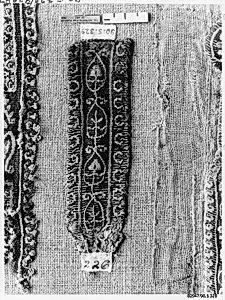
Medium
Wool, linen; plain weave, tapestry weave
Dimensions
Max. H. 5 3/16 in. (13.2 cm) Max. W. 1 5/16 in. (3.4 cm)
Classification
Textiles
Department
Islamic Art
Museum
Metropolitan Museum of Art, New York, NY
Credit
Gift of George F. Baker, 1890
Accession Number
90.5.329
Rights
Public Domain
Art Historical Context
This delicate *Fragment of a Shoulder Band dating to the 5th, offers a tantalizing glimpse into ancient textile artistry from the world that would later shape Islamic culture. Crafted from wool and linen using plain weave for the foundation and tapestry weave for decoration, this tiny piece—measuring just 5 3/16 inches high and 1 5/16 inches wide—was likely part of a garment's ornamental band, adorning the shoulder of a tunic or robe. Such fragments are rare survivors, preserved through the arid climates of regions like Egypt or the Near East, and now housed in the Metropolitan Museum of Art's Department of Islamic Art, thanks to a 1890 gift from George F. Baker. The dual weaving techniques highlight sophisticated craftsmanship: plain weave provided sturdy structure, while tapestry weave allowed for intricate, pictorial motifs woven directly into the fabric, a method prized for its durability and vivid color retention without relying on dyes that fade. In the 5th century, these skills bridged late antique traditions—possibly Coptic or Sasanian influences—with the emerging aesthetics of the Islamic world. Though small, this artifact whispers of daily life, status, and trade networks in a pivotal era, reminding us how textiles carried stories across centuries. A true treasure for textile enthusiasts!