
Fragment of a Sleeve
Unknown Artist
5th–6th century
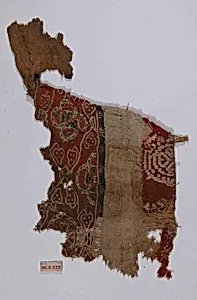
Medium
Wool, linen; plain weave, tapestry weave
Dimensions
Max. H. 8 7/16 in. (21.5 cm) Max. W. 4 15/16 in. (12.6 cm)
Classification
Textiles
Department
Islamic Art
Museum
Metropolitan Museum of Art, New York, NY
Credit
Gift of George F. Baker, 1890
Accession Number
90.5.222
Rights
Public Domain
Art Historical Context
This delicate *Fragment of a Sleeve* the 5th–6th century offers a tantalizing glimpse into the textile artistry of Late Antiquity, preserved in the Metropolitan Museum of Art Department of Islamic Art. Craft from wool and linen using weave for the foundation and tapestry weave for decorative elements, this small piece—measuring just 8 7/16 inches high by 4 15/16 inches wide—was once part of a garment sleeve. Such fragments are rare survivors, highlighting the sophisticated weaving techniques employed in regions like Egypt or the Near East, where textiles blended functionality with ornamentation. The use of tapestry weave, in which colored weft threads create patterns without a ground fabric, demonstrates advanced skill and allowed for vibrant motifs on clothing. During this era, just before the rise of Islam, such garments reflected cultural exchanges between Byzantine, Sassanian, and local traditions, with wool providing durability and linen breathability for everyday wear. Textiles like this were essential to daily life and status, often featuring geometric or figural designs that influenced later Islamic art. Generously gifted to the Met in 1890 by George F. Baker, this fragment invites us to appreciate the artistry hidden in humble clothing remnants, connecting us to the hands that wove them over 1,500 years ago.