
Fragment of a Sleeve
Unknown Artist
4th–5th century
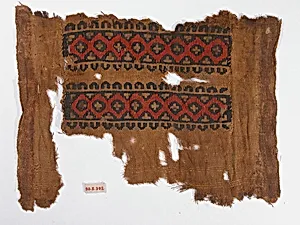
Medium
Wool, linen; plain weave, tapestry weave
Dimensions
Max. H. 7 1/16 in. (18 cm) Max. W. 5 7/8 in. (15 cm)
Classification
Textiles
Department
Islamic Art
Museum
Metropolitan Museum of Art, New York, NY
Credit
Gift of George F. Baker, 1890
Accession Number
90.5.303
Rights
Public Domain
Art Historical Context
This delicate *Fragment of a Sleeve* the 4th–5th century offers a glimpse into the sophisticated textile traditions of Late Antique Egypt, now housed in the Metropolitan Museum of Art's Art department. Crafted from wool and linen using plain weave for the sturdy ground fabric and tapestry weave for decorative motifs, this small piece—measuring just 7 1/16 by 5 7/8 inches—was likely part of a garment sleeve, highlighting the everyday artistry of the era. The dual weaving techniques reflect advanced craftsmanship, where tapestry weave allowed weavers to create vibrant, pictorial patterns by interworking colored yarns, a method prized for its durability and colorfastness in the hot climate. Such textiles bridged Roman, Byzantine, and local Egyptian influences, serving both practical clothing needs and symbolic decoration. As a gift from George F. Baker in 1890, this fragment preserves a tangible link to pre-Islamic cultural life in regions that later flourished under Islamic rule, underscoring the continuity of textile innovation across centuries. Visitors can appreciate how these humble remnants reveal the ingenuity of anonymous artisans in adorning daily wear.