
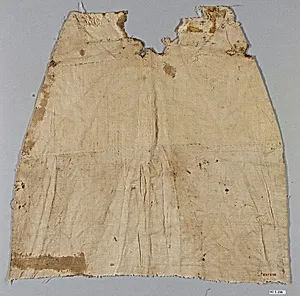
Fragment of a Tunic
Unknown Artist
6th century
Medium
Linen
Classification
Textiles
Department
Islamic Art
Museum
Metropolitan Museum of Art, New York, NY
Credit
Gift of George F. Baker, 1890
Accession Number
90.5.29b
Rights
Public Domain
Art Historical Context
This delicate *Fragment of a Tunic*, crafted from linen in the 6th century, offers a rare glimpse into late antique textile artistry from the Islamic world. Dating to a pivotal era just before the rise of Islam, such garments were everyday wear in regions like Egypt or the Levant, where linen—prized for its coolness and durability—was woven on simple looms. As a survivor of daily life, this fragment highlights the technical skill of anonymous weavers who produced finely spun threads, often dyed with natural pigments for vibrant patterns now faded by time. In the Metropolitan Museum of Art's Islamic Art department, this piece underscores the continuity of textile traditions that bridged pre-Islamic and early Islamic cultures. Linen tunics like this were essential for both commoners and elites, symbolizing status through weave quality and decoration. Textiles were a major trade commodity, traveling along ancient routes and influencing artistic motifs that later flourished in Islamic design. Generously gifted by George F. Baker in 1890, this artifact preserves not just fabric, but stories of craftsmanship and cultural exchange. Visitors can marvel at its tactile history, a testament to how everyday objects endure as windows into vanished worlds.