
Fragment of a Tunic
Unknown Artist
3rd–4th century
Medium
Wool, linen; plain weave, tapestry weave
Dimensions
Max. H. 17 1/8 in. (43.5 cm) Max. W. 3 5/8 in. (9.2 cm)
Classification
Textiles
Department
Islamic Art
Museum
Metropolitan Museum of Art, New York, NY
Credit
Gift of George F. Baker, 1890
Accession Number
90.5.308
Rights
Public Domain
Art Historical Context
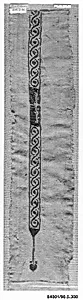
This delicate fragment of a tunic, to the 3rd–4th century, a rare glimpse into the everyday clothing of people in the ancient Mediterranean world, likely from Egypt during the Late Antique period. Preserved in the Metropolitan Museum of's Department of Islamic Art—thanks to a generous gift from George F. in 1890—it measures just 17⅛ inches high and 3⅝ inches wide, hinting at the garment's original sleeve or border. Such textiles are invaluable survivors, as organic materials rarely endure millennia, providing direct evidence of fashion, trade, and craftsmanship in a vibrant era bridging Roman, Byzantine, and early Islamic influences. Crafted from wool and linen using plain weave for the sturdy ground fabric and tapestry weave for decorative accents, the piece showcases sophisticated techniques. Plain weave created a simple, durable tabby structure ideal for clothing, while tapestry weave—where colored wefts completely cover the warp—allowed for intricate patterns without floating threads. This method, common in Coptic Egyptian workshops, highlights skilled labor and access to dyed fibers, reflecting a thriving textile industry that exported goods across empires. As a humble yet eloquent artifact, this tunic fragment illuminates cultural exchanges and daily life, from the weavers' artistry to the wearer's world. Visitors can appreciate how such small relics weave the rich tapestry of history.