
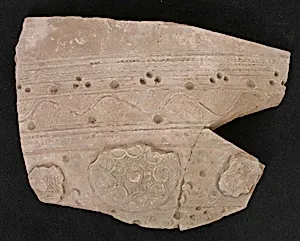
Fragment of Jar
Unknown Artist
10th–11th century
Medium
Earthenware; incised and unglazed
Classification
Ceramics
Department
Islamic Art
Museum
Metropolitan Museum of Art, New York, NY
Credit
Rogers Fund, 1940
Accession Number
40.170.454
Rights
Public Domain
Art Historical Context
This intriguing *Fragment of Jar*, dating to the 10th–11th century offers a glimpse into the vibrant ceramic traditions of the Islamic world during a golden age of artistic innovation. Crafted from unglazed earthenware, it hails from the Metropolitan Museum of Art's Islamic Art Department, acquired through the Rogers Fund in 1940. Though only a fragment survives, it speaks volumes about everyday pottery production in regions like the Abbasid heartlands or emerging dynasties, where ceramics were essential for storage, trade, and domestic life. The piece showcases incising—a meticulous technique where designs were carved directly into the soft clay before firing. Without glaze, the raw earthenware texture highlights the artist's skill in creating texture and pattern through subtraction, a hallmark of early Islamic pottery before the widespread adoption of lustreware and turquoise glazes. This unglazed style was practical, durable, and often decorated with geometric motifs or calligraphy, reflecting cultural values of craftsmanship and restraint in ornament. As a testament to medieval Islamic ingenuity, this fragment underscores how ceramics bridged utility and artistry, influencing global traditions. Visitors can appreciate its tactile honesty up close, evoking the hands of anonymous potters from over a millennium ago.