
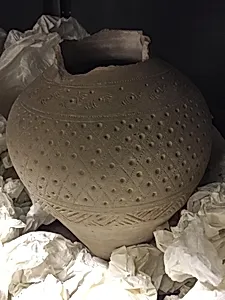
Jar
Unknown Artist
11th century
Medium
Earthenware; incised and unglazed
Classification
Ceramics
Department
Islamic Art
Museum
Metropolitan Museum of Art, New York, NY
Credit
Rogers Fund, 1948
Accession Number
48.101.12
Rights
Public Domain
Tags
Art Historical Context
This 11th-century earthenware jar, crafted by an unknown artist in the Islamic world, exemplifies the everyday artistry of medieval Islamic ceramics. Housed in the Metropolitan Museum of Art's Department of Islamic Art (acquired through the Rogers Fund in 8), it dates to a dynamic era of cultural flourishing under caliphates like the Abbas or Fatimids, when pottery was essential for storage, trade, and household use across regions from Iraq to Persia. The jar's unglazed earthenware body highlights early ceramic techniques before the widespread adoption of glossy glazes. Artisans incised intricate patterns directly into the damp clay, creating textured designs that catch the light and reveal the material's warm, earthy tones after firing. This labor-intensive method, known as sgraffito-like incising, allowed for subtle, tactile decoration without pigments, emphasizing craftsmanship over opulence. As a survivor of daily life, this jar offers a window into Islamic material culture—practical yet beautifully wrought. Its simple form and motifs likely drew from nature or geometry, core to Islamic design, reminding us how ordinary objects carried profound aesthetic value in the 11th century.