
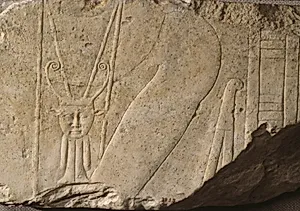
Fragment of relief
Unknown Artist
ca. 1981–1802 B.C.
Medium
Limestone, paint
Dimensions
h. 20 cm (7 7/8 in); w. 31 cm (12 3/16 in)
Classification
Relief, Senwosret I
Period
Middle Kingdom
Department
Egyptian Art
Museum
Metropolitan Museum of Art, New York, NY
Credit
Rogers Fund, 1939
Accession Number
39.1.5
Rights
Public Domain
Tags
Art Historical Context
This captivating fragment of limestone relief hails from Egypt's Middle Kingdom, specifically Dynasty 12 (ca. 1981–1802 B.C.), a golden age of artistic refinement and political stability under pharaohs Amenemhat and Senusret. Carved from limestone and once vividly painted—traces of which may linger—this modest piece (20 cm high by 31 cm wide) as a window into ancient monumental art, likely originating from a tomb or temple wall. Egyptian reliefs like this one masterfully combined sculpture and painting, using sunk or raised techniques to depict figures in profile, often with idealized faces symbolizing eternal life and divine order. The focus on faces here underscores the culture's emphasis on individuality within hierarchy—nobles, officials, or deities rendered with serene expressions and precise details. Paint enhanced realism and vibrancy, drawing the eye in sacred spaces. Acquired through the Rogers Fund in 1939, this artifact at the Metropolitan Museum of Art invites us to ponder the daily rituals and beliefs of a civilization that blurred art and religion. Though fragmented, it echoes the enduring legacy of Middle Kingdom craftsmanship, where stone preserved stories for eternity.