
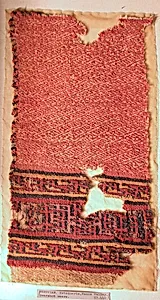
Fragment (Shawl)
1000-1532
Medium
cotton and camilid wool, plain weave with supplementary patterning wefts; cotton and camilid wool, single interlocking tapestry weave (paired warps); and cotton, plain weave with supplementary patterning wefts; edged with camilid wool in cross knit loop stitches; left selvage present: wefts turn on paired weft selvage cord; heading present: three heading cords
Dimensions
38.1 × 18.4 cm (15 × 7 1/4 in.)
Classification
textile
Department
Textiles
Museum
Art Institute of Chicago
Accession Number
6436
Rights
Public Domain
Art Historical Context
This fragment of a shawl originates from the Ica culture of Peru’s south coast, created between 1000 and 1532 CE, a time when Andean textile traditions reached extraordinary refinement. Produced in cotton and camelid wool, the piece combines several weaving techniques—plain weave with supplementary patterning wefts, single interlocking tapestry weave, and an edging of cross-knit loop stitches—demonstrating the skilled hands of its makers. Such fragments offer rare glimpses into the larger garments once worn for daily life, ritual, or status display. Andean textiles like this one held profound cultural value, often serving as markers of identity, wealth, and social connection. The use of durable camelid fibers alongside fine cotton allowed for vibrant patterns and structural strength, while the meticulous selvage finishes reflect a deep respect for craftsmanship. Though only a portion survives, the work reveals the technical sophistication and aesthetic sensibilities of pre-Columbian coastal societies. Visitors can appreciate how every thread contributes to a legacy of innovation that continues to inspire contemporary textile artists today.