
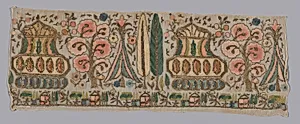
Fragment (Towel End)
19th century
Medium
Linen; silk embroidery
Dimensions
18.2 × 49.5 cm (7 1/8 × 19 1/2 in.)
Classification
textile
Department
Textiles
Museum
Art Institute of Chicago
Accession Number
79178
Rights
Public Domain
About this artwork
This embroidered textile fragment was cut from the ends of a bath towel. During the 19th and early 20th centuries, Europeans were fascinated by these intricately decorated textiles and fervently collected them, creating a market for fabric fragments. European influence on the market led to stylistic shifts: the stylized floral imagery of earlier periods was replaced with architectural forms and detailed depictions of nature, as seen in this example. —Atlas Defne Erkan (Turkish), graduate studen...
Art Historical Context
This delicate *Fragment (Towel End)* from the 19th century offers a glimpse into everyday domestic artistry. Crafted from fine linen with intricate silk embroidery, this 18.2 × 49.5 cm piece likely served as the decorative border of a household towel. Its survival as a fragment underscores the fragility of textiles, preserving a tactile link to bygone routines. In the 19th century, embroidery like this was a widespread craft, often practiced by women at home to beautify functional linens. The use of lustrous silk threads on sturdy linen created vibrant contrasts, enhancing both durability and visual appeal—silk's sheen elevating simple household items into works of quiet elegance. Such pieces reflect the era's blend of utility and ornamentation, common in European and American homes. Housed in the Art Institute of Chicago's Textiles Department, this fragment highlights the museum's commitment to everyday artifacts. It invites us to appreciate the skilled hands behind anonymous creations, reminding visitors that art thrived not just in grand canvases, but in the linens that draped daily life.
About the Artist
Unknown
The artist designated as "Unknown" in our virtual museum's collection exemplifies a poignant chapter in art history: creators whose identities have faded into obscurity despite the enduring power of their work. With only one known artwork attributed to them in our holdings, this figure represents countless anonymous hands that shaped visual culture across centuries. Museums worldwide, including th...