
Fragment (Towel or Napkin)
1875/1900
Medium
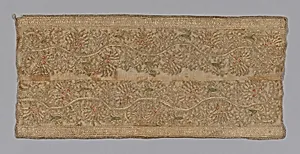
Towel ends, embroidered in gold in design of running floral spray
Dimensions
23.2 × 51.2 cm (9 1/8 × 20 1/8 in.)
Classification
textile
Department
Textiles
Museum
Art Institute of Chicago
Accession Number
71528
Rights
Public Domain
About this artwork
This embroidered textile fragment was cut from the ends of a bath towel. During the 19th and early 20th centuries, Europeans were fascinated by these intricately decorated textiles and fervently collected them, creating a market for fabric fragments. European influence on the market led to stylistic shifts: the stylized floral imagery of earlier periods was replaced with architectural forms and detailed depictions of nature, as seen in this example. —Atlas Defne Erkan (Turkish), graduate studen...
Art Historical Context
This delicate textile fragment, likely the embroidered ends of a towel or, dates to between 1875 and 1900 and exemplifies the exquisite craftsmanship of late 19th-century domestic linens. Measuring just 23.2 × 51.2 cm, it features a running floral spray design meticulously worked in shimmering gold thread. Such opulent embroidery transformed everyday items into luxurious objects, reserved for affluent households or special occasions. The use of gold embroidery highlights advanced needlework techniques, where fine metallic threads were couched or surface-applied to create a luminous, flowing pattern that evokes nature's abundance. In an era bridging artisanal traditions and emerging industrialization, these textiles represented both personal artistry—often by skilled women—and cultural aspirations for elegance in daily life. Preserved in the Art Institute of Chicago's Textiles Department, this piece offers a glimpse into the tactile beauty of historical fabrics, reminding us how even humble napkins could dazzle. Though the artist remains unknown, the fragment's survival underscores the enduring value of such intricate work, bridging utility and fine art in museum collections today.
About the Artist
Unknown
The artist designated as "Unknown" in our virtual museum's collection exemplifies a poignant chapter in art history: creators whose identities have faded into obscurity despite the enduring power of their work. With only one known artwork attributed to them in our holdings, this figure represents countless anonymous hands that shaped visual culture across centuries. Museums worldwide, including th...