
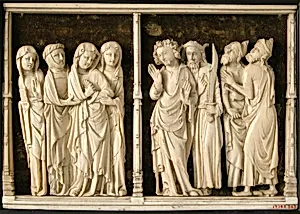
Fragments of a Crucifixion
Unknown Artist
late 14th or early 15th century
Medium
Elephant ivory, velvet pasteboard
Dimensions
Overall (ivory only): 4 3/8 x 6 3/16 x 1/2 in. (11.1 x 15.7 x 1.2 cm) with frame: 5 1/4 x 7 3/16 x 3/4 in. (13.4 x 18.2 x 1.9 cm)
Classification
Ivories-Elephant
Culture
French or South Netherlandish
Department
Medieval Art
Museum
Metropolitan Museum of Art, New York, NY
Credit
Gift of J. Pierpont Morgan, 1917
Accession Number
17.190.243
Rights
Public Domain
Tags
Art Historical Context
"Fragments of a Crucifix," crafted by an unknown artist in the late th or early 15th century, exemplifies the exquisite ivory carvings produced in French or South Netherland workshops during the late Gothic period. This delicate relief sculpture, made from elephant ivory mounted on velvet pasteboard, measures just 4 3/8 x 6 3/16 inches (ivory only), making it a prime example of portable devotional art designed for personal prayer and contemplation. The Met's Medieval Art collection highlights such works, gifted by J. Pierpont in 1917, as treasures of religious piety. Ivory's creamy translucency and fine grain allowed carvers to achieve lifelike drapery, expressive faces, and intricate details in scenes like the Crucifixion, often featuring Christ on the cross flanked by mourning figures, including holy women. These fragments likely preserve parts of a larger narrative panel, showcasing the technical mastery of undercutting and polishing that brought spiritual drama to life in miniature form. South Netherlandish and French ivories were prized across Europe for their emotional intensity and realism, bridging Byzantine influences with emerging Northern Renaissance naturalism. Though incomplete, this piece invites visitors to ponder the intimate faith of medieval devotees who carried such objects as talismans of devotion, underscoring ivory's cultural prestige as a luxury material symbolizing purity and divine grace.