
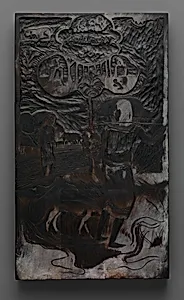
Fragrance (Noa Noa), from Fragrance (Noa Noa), title block
1893–94
Medium
Woodblock (fruit wood) with traces of zinc white and ink See Notes regarding wood identification.
Dimensions
13 7/8 x 8 x 7/8 in. (35.2 x 20.3 x 2.2 cm)
Classification
Blocks
Department
Drawings and Prints
Museum
Metropolitan Museum of Art, New York, NY
Credit
Harris Brisbane Dick Fund, 1937
Accession Number
37.97
Rights
Public Domain
Tags
Art Historical Context
Paul Gauguin's *Fragrance (Noa Noa), from France (Noa Noa), title block* (1893–94) the artist's fascination with Tahiti during his transformative stay there from 1891 to 1893. "Noa Noa," meaning "fragrant" in Tahitian, evokes lush, exotic scents and visions that inspired Gauguin's Post-Impressionist and Symbolist works. This served as the title block for a series of woodcuts, reflecting his embrace of Polynesian culture and rejection of European conventions. Carved from fruit wood with traces of zinc white and ink, the block measures 13⅞ × 8 × ⅞ inches and reveals Gauguin's pioneering technique in woodblock printing. He carved directly into the wood with a rough, bold hand, mimicking the directness of Oceanic art and creating textured, primitive prints. Tags noting women, animals, and trees suggest idyllic Tahitian scenes—likely nude figures amid nature—highlighting themes of paradise, sensuality, and harmony with the environment. Acquired through the Harris Brisbane Dick Fund in 1937 and housed in the Metropolitan Museum of Art's Drawings and Prints department, this block exemplifies Gauguin's innovative printmaking experiments. It bridges his paintings and prints, offering visitors a tactile glimpse into his quest for an unspoiled, spiritual world.
About the Artist
Paul Gauguin · 1848–1903
Paul Gauguin (1848-1903) was a French Post-Impressionist painter whose bold experiments with color, form, and subject matter made him one of the most influential figures in the transition from 19th-century art to modernism. His rejection of European civilization for the perceived authenticity of 'primitive' cultures established an archetype of artistic exile that continues to resonate. Gauguin's ...