
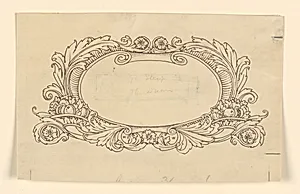
Frame, for Book Illustration
Medium
graphic design
Classification
graphic design
Department
Smithsonian Collection
Museum
Smithsonian American Art Museum
Credit
Smithsonian American Art Museum
Accession Number
1953-48-94
Rights
Public Domain
About this artwork
Research in Progress
Art Historical Context
This elegant *Frame, for Book Illustration*, produced by the esteemed New York publishing house Charles Scrib Sons around 1910, exemplifies the graphic design of early 20th-century American bookmaking. Scribner's, a powerhouse since the mid-19th century, renowned for illustrated editions of literary classics by authors like Henry James and Edith Wharton. Such frames served as decorative borders around images, enhancing the visual harmony of printed pages and elevating the reader's experience. Created during a transitional era in graphic arts—bridging Art Nouveau's flowing lines with emerging modernist simplicity—this piece highlights the publisher's in-house expertise in typography and ornamentation. Graphic design like this was crucial for branding books, making them collectible art objects amid the booming print culture of the Progressive Era. Techniques likely involved precise line work, possibly zinc engravings or lithographic plates, optimized for mass reproduction while retaining artistic finesse. Housed in the Smithsonian American Art Museum's collection, this frame underscores the cultural role of commercial design in democratizing beauty through literature. Though research continues, it invites us to appreciate how everyday publishing artifacts captured the era's aesthetic aspirations.