
Francesco Bartolozzi
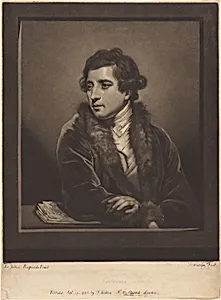
Medium
mezzotint on laid paper
Dimensions
sheet (trimmed within plate mark): 38.1 x 28 cm (15 x 11 in.)
Classification
Department
CG-E
Museum
National Gallery of Art, Washington, D.C.
Credit
Ailsa Mellon Bruce Fund
Accession Number
1991.89.3
Rights
Public Domain
Art Historical Context
This elegant mezzotint print, titled *Francesco Bartolozzi* (1785), captures the likeness of the renowned Italian engraver Francesco Bartolozzi, a master of stipple engraving who flourished in 18th-century London. Created by Thomas Watson after an original portrait by Sir Joshua Reynolds—one of Britain's foremost painters and founder of the Royal Academy—it exemplifies the collaborative spirit of the era's portraiture. Reynolds' painterly style, with its soft modeling and psychological depth, translates beautifully into print form, making elite likenesses accessible to a broader audience. The medium, mezzotint on laid paper, showcases Watson's technical prowess. Mezzotint, invented in the 17th century, involves roughening a copper plate to hold deep blacks, then scraping and burnishing to create luminous highlights—a "dark manner" technique perfect for Reynolds' tonal richness. Trimmed to 38.1 x 28 cm (15 x 11 in.), this intimate sheet reflects the popularity of such reproductive prints, which democratized art during the Enlightenment. Housed in the National Gallery of Art's CG-E department through the Ailsa Mellon Bruce Fund, this work highlights the cultural exchange between painting and printmaking in Georgian Britain, preserving Bartolozzi's legacy as a bridge between Italian and British graphic arts. A testament to 18th-century innovation, it invites visitors to appreciate the velvety textures that once adorned collectors' walls.