
Frank MacDowell
1880s
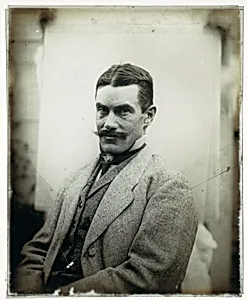
Medium
Glass positive
Classification
Transparencies
Department
Photographs
Museum
Metropolitan Museum of Art, New York, NY
Credit
Gift of Charles Bregler, 1947
Accession Number
47.62.5
Rights
Public Domain
Tags
Art Historical Context
Thomas Eakins' *Frank MacDowell* (1880s) is a striking glass positive transparency, offering a glimpse into the artist's pioneering work in photography. Captured at the Metropolitan Museum of Art the 1947 gift of Charles Bregler, portrait depicts a man with Eakins' characteristic unflinching realism. As a glass positive—a direct positive image on glass, viewable by transmitted light—it exemplifies 19th-century photographic technology, prized for its clarity and detail, often used for study or lantern slide projection. Eakins, a leading American realist painter, blurred the lines between painting and photography, employing the camera to dissect anatomy, motion, and light with scientific precision. His portraits, like this one of Frank MacDowell (likely a friend or model), reflect his commitment to honest depiction, free from Victorian idealization. These works were not mere snapshots but tools for artistic exploration, influencing his renowned canvases of rowers, surgeons, and everyday figures. Housed in the Met's Photographs Department, *Frank MacDowell* highlights photography's role in bridging art and science during the Gilded Age. Visitors will appreciate its intimate gaze, revealing Eakins' enduring quest to capture the human form in its raw vitality. (198 words)
About the Artist
Thomas Eakins · 1844–1916
Thomas Eakins (1844-1916) was an American painter, photographer, and educator who carried 19th-century American Realism to its highest achievement. Based in Philadelphia throughout his life, he created uncompromising portraits and genre scenes that depicted American life with a scientific precision and psychological depth unprecedented in his time. Born into an educated Philadelphia family, Eakin...