
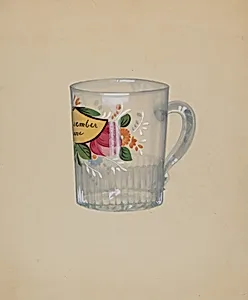
Friendship Mug
c. 1937
Medium
watercolor, graphite, and gouache on paperboard
Classification
Index of American Design
Department
CG-W
Museum
National Gallery of Art, Washington, D.C.
Credit
Index of American Design
Accession Number
1943.8.11338
Rights
Public Domain
Art Historical Context
Behold the *Friendship Mug*, a watercolor, graphite, and gouache by Elizabeth Dimling, created around 1937. This delicate work on paperboard captures the charm of a traditional folk art vessel—likely a ceramic mug adorned with heartfelt inscriptions celebrating companionship, a motif popular in 19th-century American decorative. Dimling's precise draftsmanship brings the mug's curves, textures, and sentimental details to life, evoking the everyday poetry of yesteryear. As part of the *Index of American Design*, a New Deal-era Federal Art Project (1935–1942), this piece holds profound historical significance. Commissioned under the Works Progress Administration during the Great Depression, the Index employed artists like Dimling to document America's rich heritage of folk crafts through over 18,000 meticulous illustrations. Housed in the National Gallery of Art, it preserves cultural artifacts that might otherwise fade from view, highlighting the ingenuity of American designers and artisans. Dimling's masterful use of gouache for vibrant opacity, layered with translucent watercolor and fine graphite lines, exemplifies the Index's commitment to both documentary accuracy and artistic beauty. These techniques not only replicate the mug's form but also infuse it with a timeless warmth, reminding visitors of friendship's enduring role in American life.
About the Artist
Elizabeth Dimling · 1855–present
Elizabeth Dimling remains an enigmatic figure in the art world, with biographical details largely absent from major art historical databases, Wikipedia entries, and standard reference sources. Her nationality is listed as other, suggesting origins outside the most commonly documented Western European or North American artistic traditions, yet no specific country or cultural context has surfaced in...