
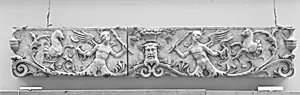
Frieze fragment
Unknown Artist
early 16th century
Medium
Marble
Dimensions
Overall (wt. confirmed): 13 1/2 × 32 1/4 in., 71 lb. (34.3 × 81.9 cm, 32.2 kg)
Classification
Sculpture-Architectural
Culture
Italian
Department
European Sculpture and Decorative Arts
Museum
Metropolitan Museum of Art, New York, NY
Credit
Gift of J. Pierpont Morgan, 1917
Accession Number
17.190.753
Rights
Public Domain
Tags
Art Historical Context
This exquisite marble frieze fragment, by an unknown Italian artist in the early 16th, offers a glimpse into the grandeur of Renaissance architectural decoration. Measuring 13½ × 32¼ inches and weighing 71 pounds, it formed part of a larger horizontal band—typical of friezes adorning palaces, churches, or public buildings. The tag "Horses" hints at dynamic relief carvings likely depicting equine figures, a motif symbolizing power, nobility, classical antiquity, which Renaissance sculptors revived with masterful precision. Crafted from durable white marble, the fragment showcases the era's technical virtuosity: low-relief techniques that create depth and movement with subtle undercutting and polished surfaces. In early 16th-century Italy, during the High Renaissance, such works bridged ancient Roman traditions with innovative humanism, as seen in masterpieces by artists like Michelangelo. This piece reflects the period's passion for harmonious proportions and narrative storytelling in stone. Generously gifted to the Metropolitan Museum of Art by J. Pierpont Morgan in 1917, the fragment now resides in the European Sculpture and Decorative Arts department. It invites visitors to imagine its original vibrant context—perhaps parading triumphantly across a frescoed facade—reminding us of Italy's enduring sculptural legacy.