
Frieze fragment
Unknown Artist
early 16th century
Medium
Marble
Dimensions
Overall (wt. confirmed): 13 1/2 × 45 in., 114 lb. (34.3 × 114.3 cm, 51.7 kg)
Classification
Sculpture-Architectural
Culture
Italian
Department
European Sculpture and Decorative Arts
Museum
Metropolitan Museum of Art, New York, NY
Credit
Gift of J. Pierpont Morgan, 1917
Accession Number
17.190.754
Rights
Public Domain
Tags
Art Historical Context
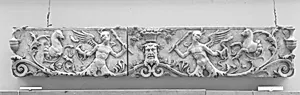
This exquisite marble frieze fragment, by an unknown Italian artist in the early 16th, captures a dynamic moment from what was likely a larger architectural narrative. Measuring 13½ × 45 inches and weighing114 pounds, it showcases finely detailed faces and horses, evoking grandeur of Renaissance decorative schemes. As an architectural sculpture, it would have adorned the facade or interior of a palace, church, or civic building, contributing to the era's revival of classical antiquity. Hailing from Italy during the High Renaissance, this piece reflects the period's mastery of marble carving—a durable medium prized for its luminous quality and ability to convey movement and emotion. The intricate relief work, with expressive human profiles and spirited equine forms, suggests a procession, battle, or mythological scene, common motifs that celebrated power, virtue, and heroism. Such friezes drew inspiration from ancient Roman precedents, blending them with Renaissance humanism to create timeless ensembles. Generously gifted to the Metropolitan Museum of Art by J. Pierpont Morgan in 1917, this fragment invites visitors to ponder the lost splendor of its original context. Though incomplete, its preserved vitality offers a window into Italy's artistic golden age, where sculpture and architecture intertwined to inspire awe.