
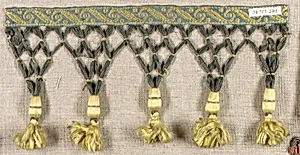
Fringe
Unknown Artist
19th century
Medium
Silk and cotton
Dimensions
12 x 5 1/2 inches 30.5 x 14.0 cm
Classification
Textiles-Trimmings
Culture
European
Department
European Sculpture and Decorative Arts
Museum
Metropolitan Museum of Art, New York, NY
Credit
Rogers Fund, 1908
Accession Number
08.103.261
Rights
Public Domain
Art Historical Context
Step into the opulent world of 19-century European decorative arts with *Fringe*, a delicate textile trimming crafted from silk and cotton. Measuring just 12 x 5½ inches (30.5 x 14.0 cm), this exquisite piece exemplifies the intricate embellishments that adorned garments, upholstery, and furnishings during the Victorian era. Silk lent a luxurious sheen and durability, while cotton provided a softer, more affordable texture, making such trims accessible yet elegant for the fashionable elite. In the 19th century, fringe like this was a hallmark of taste, often hand-knotted or woven to create cascading threads that added movement and drama to skirts, curtains, or bed hangings. Produced in Europe amid the Industrial Revolution's textile boom, it reflects the era's blend of artisanal skill and mass production influences. Acquired through the Rogers Fund in 1908, this artifact entered The Metropolitan Museum of Art's European Sculpture and Decorative Arts collection, preserving a snippet of everyday luxury. Today, *Fringe* invites us to appreciate the unsung artistry of textiles—small-scale wonders that whispered wealth and whimsy in grand interiors and wardrobes alike.