
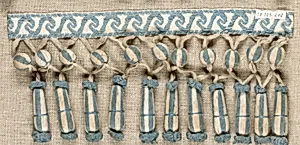
Fringe
Unknown Artist
19th century
Medium
Cotton
Dimensions
11 1/4 x 5 1/2 inches 28.6 x 14.0 cm
Classification
Textiles-Trimmings
Culture
European
Department
European Sculpture and Decorative Arts
Museum
Metropolitan Museum of Art, New York, NY
Credit
Rogers Fund, 1908
Accession Number
08.103.262
Rights
Public Domain
Art Historical Context
Step into the refined world of 19th-century European decorative arts with *Fringe*, a delicate cotton trimming that exemplifies the era's exquisite craftsmanship. Measuring just 11¼ x 5½ inches (28.6 x 14.0 cm), this small yet striking piece was acquired through the Rogers Fund in 1908 and now resides in the Metropolitan Museum of Art's Department of European Sculpture and Decorative Arts. As a textile trimming, it would have served as an elegant border for garments, upholstery, or curtains, adding texture and movement through its loose, threaded edges. In the 19th century, such fringes were prized in European households and fashion, reflecting the period's Romantic emphasis on ornamentation and handwoven luxury. Cotton, a versatile and increasingly accessible fiber due to industrial advancements, allowed for intricate designs that showcased artisanal skill amid growing mechanization. Though the artist remains unknown, this piece highlights the anonymous yet masterful labor of textile workers, whose trimmings elevated everyday objects into statements of style and status. Today, *Fringe* invites us to appreciate the tactile artistry of Europe's decorative past, reminding visitors how seemingly modest textiles wove together culture, commerce, and creativity in the 1800s.