
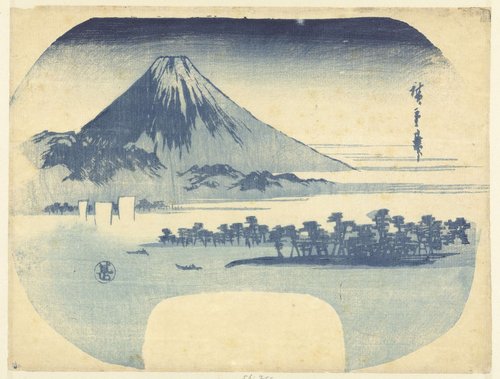
Fuji en het pijnboombos te Mio
1838 - 1842
Medium
color woodcut
Dimensions
305; 232
Rights
Public Domain
About this artwork
Purchased with the support of the Vereniging Rembrandt and the Ministerie van Onderwijs, Kunsten en Wetenschappen
Art Historical Context
Utagawa Hiroshige1797–1858), a master of Japan's ukiyo-e tradition, captures the serene beauty of Mount Fuji and the pine forest at Mio in this vibrant color woodcut from around 1838–1842. Titled *Fuji en het pijnombos te Mio*, print showcases Hiroshige's signature style delicate compositions blending everyday landscapes with the sacred presence of Japan's iconic volcano. Mio's ancient pines, framing distant Fuji, evoke the poetic harmony of nature revered in Edo-period Japan. As part of the ukiyo-e ("pictures of the floating world") movement, this work exemplifies the technical brilliance of color woodblock printing. Multiple carved wooden blocks, each inked in precise hues like Prussian blue skies and earthy greens, were meticulously overlaid to create luminous depth on thin washi paper. Measuring just 232 × 305 mm, it was designed for affordable enjoyment by travelers and urban dwellers along routes like the Tōkaidō road. Acquired with support from the Vereniging Rembrandt and the Dutch Ministry of Education, Arts, and Sciences, this print highlights Hiroshige's enduring influence on global art—from Impressionists like Van Gogh to modern design. It invites us to pause and appreciate nature's timeless allure.