
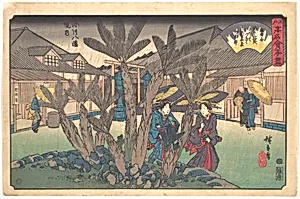
Fukagawa Hachiman Keidai (Niken Jyaya)|江戸高名会亭尽 深川八幡境内 二軒茶屋|Tea-house inside Hachiman Shrine
ca. 1835–42
Medium
Woodblock print; ink and color on paper
Dimensions
H. 9 5/8 in. (24.4 cm); W. 14 5/8 in. (37.1 cm)
Classification
Prints
Culture & Period
Japan · Edo period (1615–1868)
Department
Asian Art
Museum
Metropolitan Museum of Art, New York, NY
Credit
Rogers Fund, 1919
Accession Number
JP1165
Rights
Public Domain
Tags
Art Historical Context
In this enchanting woodblock print from Uawa Hiroshige's *Edo Kōmei Kaitei Tsuzuki* (Famous Teahouses of Edo, Continued), created around 1835–42, we glimpse a rainy afternoon at a cozy tea-house nestled within the grounds of Fukagawa Hachiman Shrine in Edo (modern-day Tokyo). Hiroshige a master of the ukiyo-e tradition—"pictures of the floating world"—ures the everyday poetry of urban life during Japan's Edo period (16151868), a time of relative peace and flourishing merchant culture. The scene buzzes with subtle drama: women huddle under umbrellas, seeking shelter amid drizzling rain and swaying trees, their colorful kimonos and oiled-paper parasols vivid against the muted grays. Hiroshige's genius shines in his atmospheric effects—fine gradations of color achieved through meticulous woodblock carving and printing techniques, layering inks to evoke moisture and depth on paper just 9⅝ × 14⅝ inches. This print not only showcases Hiroshige's influence on later artists like Van Gogh but also offers a cultural window into Edo's social hubs. Tea-houses like this one were lively spots for gossip, refreshment, and respite, reflecting the era's blend of Shinto reverence and worldly pleasures. A timeless reminder of Japan's harmonious interplay of nature and human activity.
About the Artist
Utagawa Hiroshige · 1826–1869
Utagawa Hiroshige (1797–1858), born Andō Tokutarō, was the last great master of Japanese ukiyo-e woodblock printmaking and one of the most influential landscape artists in history. Born in Edo (modern Tokyo) into a low-ranking samurai family serving as fire wardens, Hiroshige transformed landscape printmaking into a poetic meditation on nature, weather, and everyday life. His revolutionary approac...