
Fukusa (Gift Cover)
late Edo period (1789–1868)/ Meiji period (1868–1912), 19th century
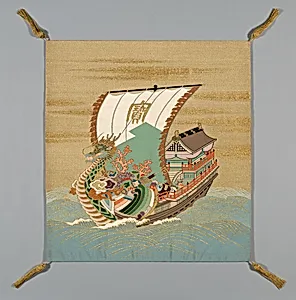
Medium
Mon side: silk, gold-leaf-over-lacquered-paper-strip wrapped silk, slit and single dovetailed tapestry weave (tsuzure); pattern side: silk, gold-leaf-over-lacquered-paper-strip-wrapped silk, slit and single dovetailed tapestry weave (tsuzure); corners: gold-leaf-over-lacquered-paper-strip wrapped cotton, 1:1 tubular oblique interlacing over cotton core, knotted; gold-leaf-over-lacquered-paper-strip-wrapped silk wrapped cotton ball, and re-plied fringe tassels
Dimensions
73.5 × 68.3 cm (28 15/16 × 26 7/8 in.); Tassel: H.: 14.3 cm (5 5/8 in.)
Classification
textile
Department
Textiles
Museum
Art Institute of Chicago
Accession Number
183451
Rights
Public Domain
Art Historical Context
This exquisite Fukusa, or ceremonial gift cover, hails from Japan's late Edo period (1789–1868) or early Meiji era (1868–1912), a time of cultural refinement and transition from feudal isolation to modernization. Measuring about 73.5 × 68.3 cm, it was draped over wrapped gifts during formal presentations, especially in tea ceremonies, symbolizing respect and elegance. These silk textiles were prized heirlooms, often displayed briefly before a gift's unveiling, embodying the Japanese aesthetic of understated luxury. Crafted by an unknown artisan, the Fukusa showcases masterful tsuzure weaving—a slit and single dovetailed tapestry technique that creates vibrant, pictorial patterns without a ground weave. The mon (crest) side and pattern side feature luxurious silk threads interspersed with gold-leaf-over-lacquered-paper strips wrapped in silk, lending a shimmering opulence. Corner reinforcements use gold-wrapped cotton in tubular oblique interlacing, finished with knotted tassels and re-plied fringe balls reaching 14.3 cm, highlighting the era's intricate textile innovations. In the Art Institute of Chicago's Textiles collection, this Fukusa reveals 19th-century Japan's fusion of tradition and technical prowess, inviting visitors to appreciate how everyday rituals became canvases for artistry.
About the Artist
Unknown
The artist designated as "Unknown" in our virtual museum's collection exemplifies a poignant chapter in art history: creators whose identities have faded into obscurity despite the enduring power of their work. With only one known artwork attributed to them in our holdings, this figure represents countless anonymous hands that shaped visual culture across centuries. Museums worldwide, including th...