
Furniture Cover for Chair
Unknown Artist
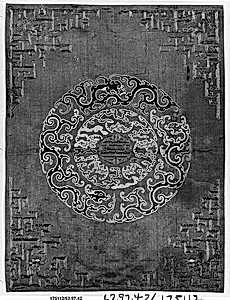
Medium
Silk, metallic thread; on silk; lined with linen (?)
Dimensions
27 3/4 x 20 3/4 in. (70.48 x 52.70 cm)
Classification
Textiles-Embroidered
Culture & Period
China · Qing dynasty (1644–1911), Kangxi period (1662–1722)
Department
Asian Art
Museum
Metropolitan Museum of Art, New York, NY
Credit
Gift of Edna Bahr, 1962
Accession Number
62.97.42
Rights
Public Domain
Art Historical Context
This exquisite furniture cover for a chair hails from China's Qing dynasty during the Kangxi period (166–1722), a era of artistic refinement under Emperor Kangxi's prosperous reign. Crafted as an embroidered textile, it exemplifies the era's mastery in luxury goods, designed to adorn and protect high-status seating in elite households. Measuring 27¾ x 20¾ inches, its size suggests it draped over the seat and back of a traditional chair, blending functionality with opulent display. Woven from silk and enriched with shimmering metallic threads, then possibly lined with linen for durability, the piece highlights advanced embroidery techniques prevalent in imperial workshops. These methods allowed for intricate patterns—likely auspicious motifs symbolizing longevity, prosperity, or harmony—rendered with precision to catch the light and elevate domestic spaces. Such textiles were not mere coverings but cultural treasures, reflecting Confucian ideals of refined living and the dynasty's global trade in silks. Today, gifted to the Metropolitan Museum of Art by Edna Bahr in 1962, this anonymous masterpiece invites us to appreciate the unsung artistry of Qing artisans, whose subtle elegance continues to captivate.