
Futon Cover (Futonji)
Meiji period (1868–1912), 19th century
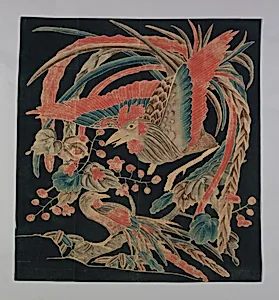
Medium
Cotton, plain weave; hand-painted, resist dyed (tsutsugaki); four loom widths joined
Dimensions
141.6 × 131.1 cm (55 3/4 × 51 5/8 in.)
Classification
textile
Department
Textiles
Museum
Art Institute of Chicago
Accession Number
225808
Rights
Public Domain
About this artwork
The traditional Japanese bedding set, known as a futon, typically consists of a padded mattress and a quilted bedcover. the latter often incorporates a decorated cover that would have been made as part of a bride's trousseau. This example bears an elaborate pattern of two phoenixes—a larger male in mid-flight prepares to join a smaller female on the branch of a Paulownia tree. The combination of a phoenix with a Paulownia tree symbolizes peace, sincerity, and benevolence—appropriate attributes f...
Art Historical Context
This vibrant futon cover (futonji) from Japan's Meiji period (186–1912) offers a window into everyday life during a time of profound transformation. As Japan rapidly modernized and opened to Western influences, traditional crafts like textile production thrived, blending functionality with artistry. Futonji were essential household items, draped over thick bedding mats (futon) for protection and decoration, often showcasing bold designs that brought color and pattern into modest homes. Measuring about 55¾ × 51⅝ inches, this piece was tailored to fit standard Japanese sleeping arrangements, its scale reflecting practical domestic needs. Crafted from plain-weave cotton—a sturdy, everyday fabric—the cover was assembled from four loom widths meticulously joined, a testament to skilled handwork. The standout technique is tsutsugaki, a resist-dyeing method where intricate rice-paste drawings repel dye, allowing artists to create sharp, vivid motifs through hand-painting and immersion in color baths. This labor-intensive process highlights the anonymous artisan's mastery, producing waterproof, durable textiles ideal for frequent use and washing. Housed in the Art Institute of Chicago's Textiles Department, this futonji exemplifies Meiji-era folk art, preserving cultural motifs amid modernization. It invites us to appreciate the quiet elegance of Japan's domestic heritage, where utility met creative expression.
About the Artist
Unknown
The artist designated as "Unknown" in our virtual museum's collection exemplifies a poignant chapter in art history: creators whose identities have faded into obscurity despite the enduring power of their work. With only one known artwork attributed to them in our holdings, this figure represents countless anonymous hands that shaped visual culture across centuries. Museums worldwide, including th...