
Gaja Lakshmi, Goddess of Fortune
Unknown Artist
6th century
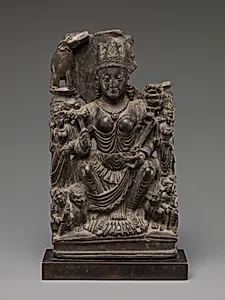
Medium
Stone
Dimensions
H. 9 7 /8 in. (25.1 cm)
Classification
Sculpture
Culture
India (Jammu and Kashmir, ancient kingdom of Kashmir)
Department
Asian Art
Museum
Metropolitan Museum of Art, New York, NY
Credit
Purchase, Mrs. Arthur Hays Sulzberger Gift and funds from various donors, 1993
Accession Number
1993.194
Rights
Public Domain
Tags
Art Historical Context
Behold the serene stone sculpture of *Gaja Lakshmi, Goddess of*, a exquisite 6th-century artifact from the ancient kingdom of in northern India. Carved from stone and standing just 9⅞ inches tall, this compact yet powerful figure embodies Lakshmi, the Hindu goddess wealth, prosperity, and good fortune. In her Gaja Lakshmi form—*gaja* meaning "elephant"—she is typically flanked by royal elephants showering her with nectar from lotus flowers, symbolizing abundance and blessings. Housed in Metropolitan Museum of Art's Asian Art Department, this piece was acquired in 1993 through generous gifts. Crafted during Kashmir's golden age of Hindu art, when the region flourished as a crossroads of spiritual and artistic innovation, the sculpture reflects early medieval Indian iconography. Stone was a favored medium for durable temple carvings, allowing intricate details to endure centuries. Though the artist remains unknown, the work exemplifies Kashmir's distinctive sculptural style: graceful proportions, soft modeling, and a sense of ethereal calm that invites devotion. For visitors, *Gaja Lakshmi* offers a window into ancient Hindu worship, where invoking her ensured household prosperity. Gaze upon her and feel the timeless promise of fortune flowing like sacred waters.