
Galloon
Unknown Artist
19th century
Dimensions
10 x 2 1/2 inches 25.4 x 6.4 cm
Classification
Textiles-Trimmings
Culture
French
Department
European Sculpture and Decorative Arts
Museum
Metropolitan Museum of Art, New York, NY
Credit
Rogers Fund, 1908
Accession Number
08.103.443
Rights
Public Domain
Art Historical Context
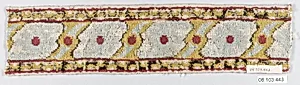
Nestled in the Metropolitan Museum of Art's European and Decorative Arts collection this delicate *Galloon* is a example of 19th-century French textile. Measuring just 10 x 2½ inches (25.4 x 6.4 cm), this narrow ornamental braid exemplifies the intricate craftsmanship of French decorative arts during an era of opulent fashion and interior design. Acquired through the Rogers Fund in 190, it highlights the Met's commitment to preserving fine textiles that once adorned garments, furnishings, and ecclesiastical vestments. Galloon, a type of woven or braided trimming often featuring metallic threads or fine patterns, was a staple in French textile production, reflecting the technical mastery of looms and embroidery techniques from the period. In the 19th century, amid the Napoleonic revival and Second Empire extravagance, such trimmings elevated everyday luxury, adding texture and shimmer to elite wardrobes and lavish décors. Though created by an unknown artist, its survival speaks to the enduring appeal of French *passementerie*—the art of ornamental trimmings. This petite artifact invites visitors to appreciate the unsung details of historical fashion, where even a slender strip could transform the ordinary into the extraordinary. A testament to France's textile heritage, it reminds us how small-scale works carry the weight of cultural elegance.