
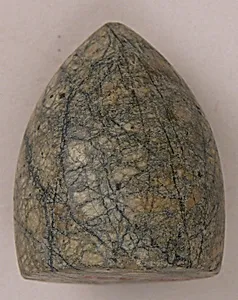
Gaming or Chess piece, possibly a Pawn
Unknown Artist
8th–11th century
Medium
Stone
Dimensions
H. 1 1/8 in. (2.8 cm)
Classification
Gaming pieces
Department
Islamic Art
Museum
Metropolitan Museum of Art, New York, NY
Credit
Pfeiffer Fund, 1972
Accession Number
1972.9.33
Rights
Public Domain
Tags
Art Historical Context
This petite stone gaming piece, possibly a pawn from the game of chess (known as *shatranj* in the Islamic world), hails from the 8th–11th century and exemplifies the artistry of early Islamic craftsmanship. Carved from durable stone and standing just 1 1/8 inches (2.8 cm) tall, its modest scale belies its cultural weight. Housed in the Metropolitan Museum of Art's Department of Islamic Art (acquired via the Pfeiffer Fund in 1972), it invites us to imagine leisurely games in bustling medieval markets or scholarly gatherings. Chess, originating in ancient India as *chaturanga*, flourished under Islamic rule after spreading through Persia in the 7th century. By this period, *shatranj* had become a symbol of intellect and strategy, beloved by caliphs, poets, and common folk alike. Such pieces, often simply yet precisely carved, reflect the game's role in fostering critical thinking and social bonding across the vast Islamic empire from Spain to Central Asia. Though anonymous in origin, this artifact's survival highlights stone's practicality for everyday playthings—resistant to wear yet portable. It offers a tangible link to a vibrant era when gaming transcended mere entertainment, embodying the ingenuity of Islamic material culture.