
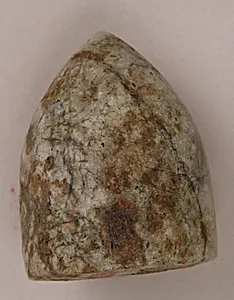
Gaming or Chess Piece, possibly a Pawn
Unknown Artist
8th–11th century
Medium
Stone
Dimensions
H. 1 1/8 in. (2.8 cm)
Classification
Gaming pieces
Department
Islamic Art
Museum
Metropolitan Museum of Art, New York, NY
Credit
Pfeiffer Fund, 1972
Accession Number
1972.9.34
Rights
Public Domain
Tags
Art Historical Context
Nestled in the Metropolitan Museum of Art's Islamic Art collection, this modest stone gaming piece—possibly a pawn from a chess set—dates to the 8th–11th century. Carved from stone and standing just 1 1/8 inches (2.8 cm) tall, its compact form speaks to the portability of everyday amusements in the medieval Islamic world. Acquired through the Pfeiffer Fund in 1972, it exemplifies the refined craftsmanship of anonymous artisans who transformed simple materials into functional art. Chess, known as *shatranj* in Arabic, flourished during this era of the Islamic Golden Age, evolving from its Indian origins and becoming a staple among scholars, caliphs, and merchants. These gaming pieces were not mere toys but symbols of intellect and strategy, often played in bustling bazaars or royal courts. The stone medium, durable yet unpretentious, highlights how chess transcended social classes, with sets crafted from ivory, wood, or rock to suit all players. Though worn by time, this artifact invites us to imagine lively games under lantern light, where each move mirrored life's calculated risks. It reminds visitors of chess's enduring cultural bridge across civilizations, blending recreation with profound philosophical undertones in Islamic heritage. (198 words)