
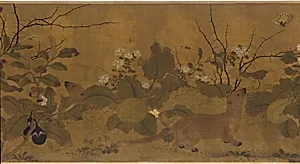
Garden scene: melons, egg-plants, flowers, and two weasels
1368-1644
Classification
Painting
Department
Smithsonian Collection
Museum
Smithsonian American Art Museum
Credit
Gift of Charles Lang Freer
Accession Number
F1911.222
Rights
Public Domain
Tags
About this artwork
To 1911
Art Historical Context
This captivating garden scene dates to China’s Ming dynasty (1368–1644), a time when artists celebrated the harmony between humans and the natural world. Though the painter remains unknown, the composition reflects the period’s refined taste for intimate, symbolic depictions of cultivated landscapes. Lush melons and eggplants mingle with delicate blooms, while two weasels add a lively, unexpected touch—perhaps alluding to vigilance or prosperity in traditional Chinese imagery. Garden subjects like this one were especially popular among scholar-officials, who saw them as metaphors for moral cultivation and retreat from court life. The careful arrangement of fruits, flowers, and creatures suggests the artist’s keen observation of seasonal abundance and the interconnectedness of all living things. Such works often graced the studios or reception halls of the educated elite. Part of the Charles Lang Freer collection, this painting now invites modern viewers to appreciate the Ming era’s enduring fascination with nature’s quiet drama and symbolic richness.
About the Artist
Unknown
The artist designated as "Unknown" in our virtual museum's collection exemplifies a poignant chapter in art history: creators whose identities have faded into obscurity despite the enduring power of their work. With only one known artwork attributed to them in our holdings, this figure represents countless anonymous hands that shaped visual culture across centuries. Museums worldwide, including th...