
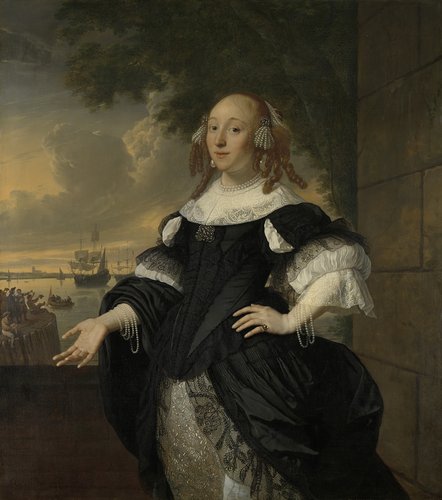
Geertruida den Dubbelde (1647-84). Echtgenote van Aert van Nes
Medium
oil on canvas
Dimensions
9; 139; 125
Rights
Public Domain
About this artwork
signature and date: ‘B. van der Helst f. 1668’
Art Historical Context
This striking oil-on-canvas portrait by Bartholomeus van der Helst captures Geertruida den Dubbelde at around twenty-one years old, shortly after her marriage to the naval officer Aert van Nes. Painted in 1668 during the height of the Dutch Golden Age, the work exemplifies the era’s flourishing tradition of commemorating prosperous citizens through elegant, life-sized likenesses. Van der Helst’s confident signature and date, clearly visible on the canvas, affirm both the painting’s authenticity and the artist’s established reputation. Van der Helst was renowned for his refined yet approachable portrait style, which blended the meticulous detail of earlier Dutch masters with a warmer, more naturalistic approach. Working in oil allowed him to render the textures of Geertruida’s luxurious satin gown, delicate lace, and shimmering jewelry with luminous depth, conveying both wealth and personal dignity. The generous scale of the canvas—nearly life-size—would have made the sitter appear present and commanding when displayed in a prosperous Amsterdam home. Today in the Rijksmuseum, the painting offers visitors a vivid glimpse into seventeenth-century Dutch society, where maritime success and family alliances shaped social standing. Through van der Helst’s skillful brushwork, Geertruida emerges not merely as a wife of a naval hero but as an individual of grace and quiet strength whose story continues to resonate across centuries.