
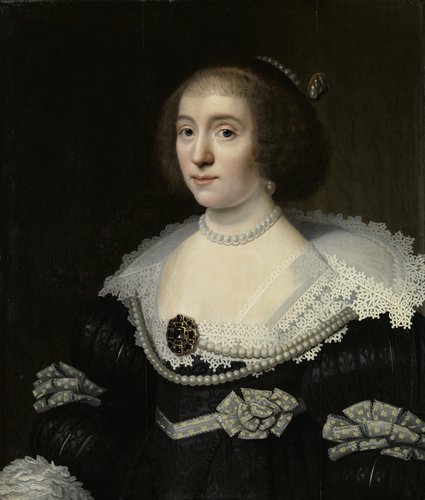
Portrait of Amalia van Solms (1602-75)
in of na ca. 1632
Medium
oil on panel
Dimensions
79.2; 55.8; 67.1; 57.2; 89.2; 66
Rights
Public Domain
About this artwork
drager: hoogte 67,1 cm x breedte 57,2 cm
Art Historical Context
This elegant oil-on-panel portrait captures Amalia van Solms, wife of Frederick Henry, Prince of Orange, at the height of her influence in the Dutch Republic. Painted in or shortly after 1632 by Michiel Jansz van Mierevelt, the work reflects the refined court culture of The Hague during the later stages of the Eighty Years’ War. Amalia’s poised expression and richly detailed attire underscore her status as a political and cultural patron who helped shape the tastes of the Orange court. Mierevelt, one of the most sought-after portraitists of the Dutch Golden Age, was renowned for his meticulous technique and dignified compositions. Working primarily in oil on panel, he achieved luminous skin tones and precise rendering of fabrics and jewelry, qualities that made his likenesses both authoritative and intimate. The compact format of this panel—roughly 67 by 57 centimeters—suggests it was intended for private display, perhaps within a cabinet or as part of a dynastic series. Today in the Rijksmuseum collection, the painting offers visitors a direct glimpse into the world of 17th-century Dutch nobility. It reminds us how portraiture served not only as personal commemoration but also as a subtle instrument of political identity during the Republic’s rise to European prominence.
About the Artist
Michiel Jansz van Mierevelt · 1567–1641
Son of the goldsmith Jan Michielsen van Miereveldt and a pupil (when he was 12 years old) of Antonio Blocklandt (known as Montfort) in Utrecht and later of Willem Willemsz. It is very difficult to distinguish his work from the innumerable copies of his paintings that he allowed to be made, even sometimes signing them with his own name. Basically a portrait painter, he also painted historical and ...