
George
1537
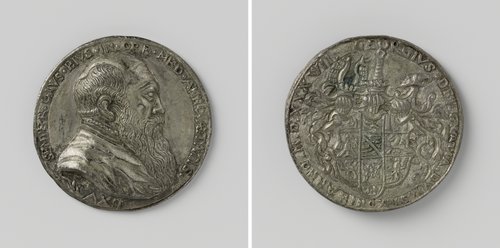
Medium
striking (metalworking)
Dimensions
39.61; 4.4
Rights
Public Domain
About this artwork
Schenking van mevrouw J.M. van Gelder-Nijhoff
Art Historical Context
Behold the exquisite medal *George*, crafted in 1537 by Peterötner, a pioneering Nuremberg artist of the Northern Renaissance. Flötnerc. 1485–1540), renowned for his mastery of metalwork, sculpture, and engraving, bridged Gothic traditions with emerging Italian Renaissance influences. This small yet striking piece—measuring just 4.4 cm in diameter and weighing 3961 grams—was produced using the "striking", where a metal blank is hammered under a die to create intricate raised designs in high relief. Medals like this represented a revolutionary portable art form in the 16th century, blending portraiture, narrative scenes, and ornamentation for collectors and patrons. Likely depicting the legendary St. George, patron saint of soldiers and a popular emblem of chivalric virtue, the medal captures Flötner's signature style: dynamic compositions infused with grotesque motifs and classical allusions. Produced amid the Protestant Reformation's cultural upheavals in Germany, it reflects the era's fascination with heroism and humanism. Today, this treasure graces collections thanks to the generous gift (*schenking*) from Mrs. J.M. van Gelder-Nijhoff, underscoring its enduring appeal to connoisseurs of Renaissance metalwork. A testament to Flötner's technical virtuosity, *George* invites us to marvel at the artistry compressed into a coin-sized canvas.
About the Artist
Peter Flötner · 1485–1546
Peter Flötner (c. 1485–1546) was a German sculptor, ornament designer, and medalist whose work played a central role in the transmission of Italian Renaissance decorative vocabulary into the German-speaking lands. Though his exact origins remain uncertain — he may have trained in Augsburg before settling permanently in Nuremberg around 1522 — his formation evidently included exposure to Italian Re...