
George Washington
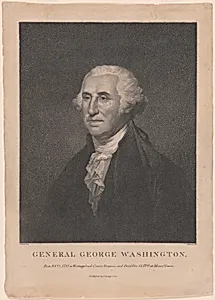
Medium
Classification
Department
Smithsonian Collection
Museum
Smithsonian American Art Museum
Credit
National Portrait Gallery, Smithsonian Institution; gift of Marvin Sadik
Accession Number
NPG.77.227
Rights
Public Domain
Tags
Art Historical Context
David Edwin's *George Washington* (1800) is a striking print portrait that captures the first President of the United States in an intimate interior setting. Born in England and active in Philadelphia, Edwin (1776–1841) was a master engraver renowned for his detailed reproductions of prominent American figures. This work, housed in the Smithsonian American Art Museum's National Portrait Gallery, exemplifies early 19th-century printmaking techniques, likely stipple engraving, which allowed for subtle shading and lifelike textures through dotted lines rather than bold cuts. Created just a year after Washington's death in 1799, the portrait honors his multifaceted legacy: Revolutionary War general, Constitutional Convention delegate, surveyor, farmer, and recipient of the Congressional Gold Medal. These tags evoke Washington's grounded persona—from Mount Vernon's fields to the halls of power—symbolizing the ideals of the new republic. Prints like this were vital in an era before photography, making heroic images accessible to households and fostering national identity. As a gift to the Smithsonian from Marvin Sadik, this piece underscores Washington's enduring cultural icon status, blending reverence with everyday humanity in a medium that democratized portraiture for all Americans.