
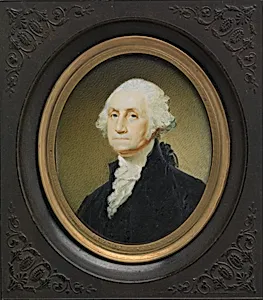
George Washington
after 1796
Medium
Painting
Classification
Painting
Department
Smithsonian Collection
Museum
Smithsonian American Art Museum
Credit
National Portrait Gallery, Smithsonian Institution; gift of the McNeil Americana Collection; conserved with funds from the Smithsonian Women's Committee
Accession Number
NPG.2013.140
Rights
Public Domain
Tags
About this artwork
Estate of Robert L. McNeil. Jr.
Art Historical Context
This enchanting miniature portrait of George Washington created by an unidentified artist after 1796 captures the first President of the United States a format prized during the early American republic. Miniature paintings like this one were intimate treasures, often worn as jewelry or kept in private cases, allowing admirers to carry the likeness of national heroes close to their hearts. Rendered in fine detail on a small scale, it reflects the era's fascination with Washington's image as a symbol of independence and leadership. Washington's storied life—as a surveyor, farmer, Revolutionary War general, and Colonial statesman—earned him the Congressional Gold Medal and enduring reverence. Painted shortly after his presidency ended in 1797, this work likely commemorates his legacy during a time when portraits proliferated to inspire patriotism. Such images helped cement his status as the "Father of His Country," bridging the Revolutionary era with the young nation's identity. Housed in the Smithsonian American Art Museum's collection (on view through the National Portrait Gallery), this piece was a gift from the McNeil Americana Collection, conserved with funds from the Smithsonian Women's Committee. It offers visitors a personal glimpse into America's founding mythos, reminding us how art preserved the icons of history.