
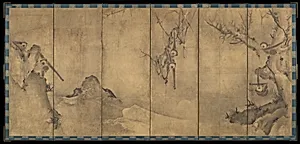
Gibbons in a Landscape
ca. 1570
Medium
Pair of six-panel screens; ink on paper
Dimensions
Image (each screen): 62 in. x 11 ft. 5 in. (157.5 x 348 cm)
Classification
Paintings
Culture & Period
Japan · Muromachi period (1392–1573)
Department
Asian Art
Museum
Metropolitan Museum of Art, New York, NY
Credit
Purchase, Rogers Fund and The Vincent Astor Foundation, Mary Livingston Griggs and Mary Griggs Burke Foundation, and Florence and Herbert Irving Gifts, 1992
Accession Number
1992.8.1, .2
Rights
Public Domain
Tags
Art Historical Context
### Gibbons in a Landscape Created around 1570 by the Japanese monk-painter Sesson Shūkei during the late Muromachi period (139–1573), *Gibbons in a Landscape is a magnificent pair of six-panel folding screens painted in ink on paper. Measuring an impressive 62 inches high by over 11 feet wide each, these screens depict playful gibbons swinging through misty mountains and rugged cliffs, blending dynamic animal life with expansive natural vistas. Sesson's work reflects the Zen-inspired ink painting tradition, where bold brushstrokes capture the wild energy of nature in a single color—black sumi ink—evoking both harmony and untamed spirit. As a master of the Sesshū school, Sesson was renowned for his expressive, almost calligraphic style, often called "boneless" for its fluid, unpainted reserves that suggest form through negative space. These screens exemplify Muromachi-era innovation in *byōbu* (folding screens), prized room dividers in elite Japanese homes and temples that transformed interiors into immersive landscapes. Gibbons, rare in Japanese art but drawn from Chinese influences, add whimsy and vitality, symbolizing freedom amid the era's political turmoil under the weakening Ashikaga shogunate. Housed in the Metropolitan Museum of Art's Asian Art Department, this acquisition highlights Sesson's enduring legacy in bridging Zen aesthetics with vivid storytelling, inviting viewers to contemplate nature's boundless drama.
About the Artist
Sesson Shūkei 雪村周継 (Japanese) · 1504 –1589
ca. 1504–ca. 1589