
Glaive-Halberd
1650
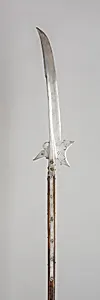
Medium
Steel, wood (oak), and iron
Dimensions
H.: 257.8 cm (101 1/2 in.); Blade with socket: H.: 66.1 cm (26 in.)
Classification
edged weapon-staff
Department
Applied Arts of Europe
Museum
Art Institute of Chicago
Accession Number
116316
Rights
Public Domain
Art Historical Context
This Glaive-Halberd, dated to 1650 and created by an unknown artist, is a formidable example of European edged weaponry from the Art Institute of Chicago’s Applied Arts of Europe collection. Standing 257.8 cm tall with a 66.1 cm steel blade and socket, it is constructed from steel, oak wood, and iron, classifying it as a staff weapon designed for both reach and striking power. The combination of a sturdy oak shaft and forged steel blade reflects the practical yet skilled craftsmanship of 17th-century Europe, where such polearms were essential tools of combat and ceremony. As a two-handed weapon, it offered users significant leverage and distance against opponents, embodying the era’s martial traditions. Though the maker remains anonymous, this piece highlights the artistic techniques of metalworking and woodworking that elevated functional arms into objects of cultural significance. It invites museum visitors to explore how everyday weapons of the time blended utility with the applied arts, preserving a vivid record of historical European ingenuity.
About the Artist
Unknown
The artist designated as "Unknown" in our virtual museum's collection exemplifies a poignant chapter in art history: creators whose identities have faded into obscurity despite the enduring power of their work. With only one known artwork attributed to them in our holdings, this figure represents countless anonymous hands that shaped visual culture across centuries. Museums worldwide, including th...