
Glass Fragment
Unknown Artist
12th–14th century
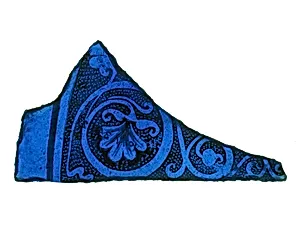
Medium
Pot-metal glass, vitreous paint
Dimensions
Overall: 1 5/8 x 3 1/4 in (4.1 x 8.3 cm)
Classification
Glass-Stained
Culture
French
Department
Medieval Art
Museum
Metropolitan Museum of Art, New York, NY
Credit
Gift of Ella Brummer, in memory of her husband, Ernest Brummer, 1977
Accession Number
1977.346.23
Rights
Public Domain
Art Historical Context
This delicate glass fragment, hailing from 12th–14th France, offers a tantalizing glimpse into the luminous world of medieval stained glass windows. Likely salvaged from a grand Gothic cathedral or church, it exemplifies the era's architectural splendor, where vast windows transformed sacred spaces into kaleidoscopes of colored light. Produced during the height of French Gothic innovation, such fragments remind us of the artistry that adorned places of worship across Europe, symbolizing divine narratives and spiritual elevation. Crafted from pot-metal glass—where metal oxides were fused into the molten glass for vibrant, jewel-like colors—and detailed with vitreous paint, this tiny piece (just 1 5/8 x 3 1/4 inches) showcases sophisticated medieval techniques. The paint, a mixture of ground glass and pigments fired onto the surface, allowed artists to add intricate lines for faces, folds, or patterns, creating depth and narrative detail without compromising the glass's translucency. These methods ensured durability against centuries of weathering. Today, housed in the Metropolitan Museum of Art's Medieval Art department as a gift from Ella Brummer in memory of her husband Ernest, this anonymous treasure highlights the fragility and resilience of medieval craftsmanship. Though incomplete, it invites us to imagine the full window's glow under sunlight, a testament to France's enduring legacy in stained glass innovation.