
Glass Fragment
Unknown Artist
12th–14th century
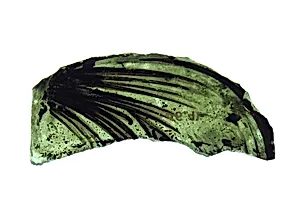
Medium
Pot-metal glass, vitreous paint
Dimensions
Overall: 2 x 3/4 in. (5.1 x 1.9 cm)
Classification
Glass-Stained
Culture
French
Department
Medieval Art
Museum
Metropolitan Museum of Art, New York, NY
Credit
Gift of Ella Brummer, in memory of her husband, Ernest Brummer, 1977
Accession Number
1977.346.41
Rights
Public Domain
Art Historical Context
This delicate glass fragment, hailing from medieval France between the 12th and 14th centuries, offers a tantalizing glimpse into the luminous world of Gothic stained glass. Likely salvaged from a grand church window, it exemplifies the era's architectural splendor, when artisans crafted vibrant panels to illuminate cathedrals with divine stories and symbols. Though tiny—measuring just 2 x ¾ inches—this shard survives as a testament to the fragility and endurance of medieval artistry, now housed in the Metropolitan Museum of's Medieval Art department, thanks to a generous gift from Ella Brummer in memory of her husband, Ernest Brummer, in 1977. Crafted from pot-metal glass—colored throughout by metallic oxides like copper for reds or cobalt for blues—and detailed with vitreous paint, the fragment showcases sophisticated techniques. Pot-metal allowed for intense, jewel-like hues that glowed under sunlight, while the paint, a ground glass mixture fired onto the surface, added fine lines, shading, and inscriptions for narrative depth. These methods, perfected in French workshops, transformed flat glass into storytelling gems, influencing religious devotion and visual culture across Europe. For visitors, this unassuming piece whispers of lost masterpieces, reminding us how even fragments preserve the sacred glow of the Middle Ages, inviting us to imagine the kaleidoscopic windows they once adorned.