
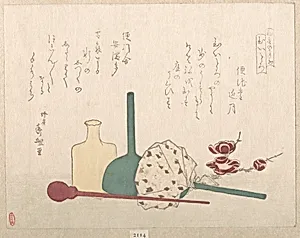
Glass-Wares with Plum Blossoms
Medium
Woodblock print (surimono); ink and color on paper
Dimensions
5 13/16 x 7 7/16 in. (14.8 x 18.9 cm)
Classification
Prints
Culture
Japan
Department
Asian Art
Museum
Metropolitan Museum of Art, New York, NY
Credit
H. O. Havemeyer Collection, Bequest of Mrs. H. O. Havemeyer, 1929
Accession Number
JP2114
Rights
Public Domain
Tags
Art Historical Context
"Glass-Wares with Plumossoms" is a delicate woodblock print (surimono) by the Japanese artist Hachif Shūri, created an unknown date but likely during the Edo period (1603–1868). just 5 13/16 x 7 7/16 inches, this intimate format was typical of surimono—privately commissioned prints often produced for New Year's greetings or poetry gatherings. Part of the prestigious H. O. Havem Collection at The Metropolitan Museum of Art, exemplifies the refined artistry of Japanese ukiyo-e traditions, blending ink and vibrant colors on paper. Surimono like this one stand out for their luxurious techniques, sometimes featuring embossing, mica dusting, or metallic pigments to enhance texture and shimmer—though specifics here highlight the crisp lines and subtle color gradients of woodblock printing. The composition pairs traditional plum blossoms, symbols of resilience and the arrival of spring amid winter's chill in Japanese culture, with elegant glass-wares. This juxtaposition may nod to the era's growing fascination with Western imports, merging local floral motifs with novel materials. As a cultural artifact, the print invites contemplation of beauty in everyday elegance, reflecting Japan's poetic appreciation for nature's transience. Visitors to the Asian Art department will appreciate its small scale, perfect for savoring up close, much like the private circles it once adorned.