
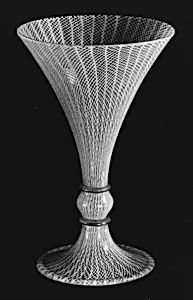
Goblet
Unknown Artist
late 16th century
Medium
Colorless (slightly gray) and opaque white nonlead glass. Blown, "vetro a retorti".
Dimensions
H. 17.6 cm; diam. of rim 10.9 cm
Classification
Glass
Culture
Italian (Venice)
Department
Robert Lehman Collection
Museum
Metropolitan Museum of Art, New York, NY
Credit
Robert Lehman Collection, 1975
Accession Number
1975.1.1147
Rights
Public Domain
Art Historical Context
This elegant goblet from late 16th-century Venice exemplifies the pinnacle of Renaissance glassmaking artistry. Crafted from colorless (slightly gray) and white nonlead glass, it stands 17.6 cm tall with a 10.9 cm rim diameter. piece was formed using the blown "vetro a retorti", a hallmark of Venetian innovation where molten glass is blown into shape and intricate threads of opaque white glass are twisted and fused into the clear body, creating mesmerizing spiral or zigzag patterns that catch the light like frozen flames. Venice, particularly the island of Murano, dominated Europe's glass trade during this era, producing luxury wares prized by nobility across the continent. The use of nonlead glass allowed for exceptional clarity and thinness without fragility, while "vetro a retorti" showcased virtuosic control over heat and color, blending functionality with opulent decoration. Goblets like this were not just for drinking but symbols of wealth and sophistication at banquets. Now part of the Robert Lehman Collection at The Metropolitan Museum of Art (acquired in 1975), this anonymous masterpiece invites us to marvel at the anonymous craftsmen's skill, evoking the glittering world of Renaissance Venice.