
Tazza
Unknown Artist
first half 16th century
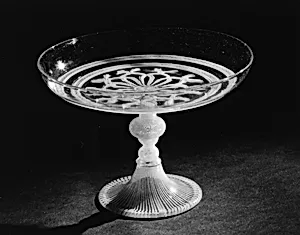
Medium
Colorless (slightly gray) and opaque white nonlead glass. Blown, "vetro a retorti", pincered.
Dimensions
H. 11.4 cm; diam.of rim 16.2 cm
Classification
Glass
Culture
Venetian or façon de Venise
Department
Robert Lehman Collection
Museum
Metropolitan Museum of Art, New York, NY
Credit
Robert Lehman Collection, 1975
Accession Number
1975.1.1216
Rights
Public Domain
Art Historical Context
This elegant *Tazza*, a shallow footed cup from the first half of the 16 century, exemplifies the pinnacle of Renaissance glassmaking from Venice—or in the refined "façon de Venise" emulated across Europe. Housed in the Robert Lehman Collection at The Metropolitan Museum of Art, delicate vessel stands just 11.4 cm tall with a 16.2 cm rim diameter, perfect for sipping wine or displaying confections at opulent banquets. Its colorless (slightly gray) glass paired with opaque white nonlead creates a luminous, almost ethereal quality, evoking the luxury of Murano's famed workshops. Crafted through masterful blown glass techniques, the tazza features "vetro a retorti"—intricate twisted threads of glass that form striking spiral patterns—combined with pincering to shape its form precisely. These methods, guarded secrets in Venice to maintain trade dominance, highlight the era's technical innovation, producing objects that rivaled metalwork in prestige without the weight. As a cultural treasure, this anonymous masterpiece reflects Venice's role as Europe's glassmaking capital during the Renaissance, where such pieces symbolized wealth and sophistication. Exported widely, they influenced artisans from the Netherlands to England, bridging art and everyday luxury in elite households. Visitors, imagine toasting with this beauty—its subtle imperfections a testament to handcrafted perfection.