
Goblet
c. 1600
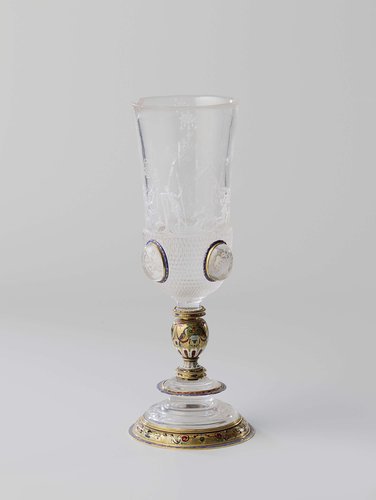
Medium
gold (metal)
Dimensions
7.8; 8.6; 22.4
Rights
Public Domain
About this artwork
grondvlak: diameter 8,6 cm
Art Historical Context
This elegant gold goblet, crafted around 1600 by an anonymous artisan, stands as a testament to the opulence of late Renaissance metalwork. Measuring 22.4 cm in height with a body diameter of 7.8 cm and a sturdy base of 8.6 cm, it exemplifies the finely balanced proportions favored in ceremonial drinking vessels of the era. Such goblets were prized possessions, often commissioned for royal courts, banquets, or diplomatic gifts, showcasing the wearer's status and wealth. Dating to circa 1600, the piece emerges from a golden age of European goldsmithing, particularly in the Low Countries and Germany, where skilled craftsmen transformed precious metals into functional art. Gold's rarity and malleability allowed for intricate hammering, chasing, and possibly gilding techniques, though this example's precise decoration remains understated in surviving records. Its survival highlights the enduring value of such objects, many of which were melted down during economic hardships. For museum visitors, this goblet offers a tangible link to 17th-century elite culture, evoking images of candlelit feasts and lavish entertainments. Though anonymous, its masterful execution underscores the collaborative genius of period workshops, blending utility with subtle splendor.
About the Artist
anonymous
In the vast tapestry of art history, "Anonymous" stands not as a singular individual but as a collective designation for countless unidentified creators whose works have endured across millennia. These artists, spanning prehistoric cave painters to medieval illuminators and folk craftsmen, produced the foundational layers of human visual culture. Prior to the Renaissance, when individual fame emer...