
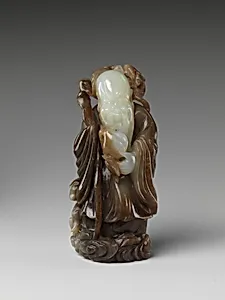
清晚期 瑪瑙壽星|God of longevity
Unknown Artist
19th century
Medium
Jade (nephrite)
Dimensions
H. 3 5/8 in. (9.2 cm); W. 1 11/16 in. (4.3 cm); D. 1 3/8 in. (3.5 cm)
Classification
Jade
Culture & Period
China · Qing dynasty (1644–1911)
Department
Asian Art
Museum
Metropolitan Museum of Art, New York, NY
Credit
Gift of Heber R. Bishop, 1902
Accession Number
02.18.651
Rights
Public Domain
Tags
Art Historical Context
This exquisite nephrite jade carving depicts Shou Xing, the God of Longevity, a beloved deity in Chinese folklore symbolizing health, prosperity, and an extended lifespan. Crafted in the late Qing dynasty (164–1911), during the 19th century, this small figurine stands just 3⅝ inches tall, making it a perfect talisman for personal devotion or display on a scholar's desk. Acquired as a gift from Heber R. Bishop in 1902, it now graces the Asian Art collection at The Metropolitan Museum of Art. Nephrite jade, revered in China as "yu" or the "stone of heaven," was prized for its creamy white to pale green hues and reputed purity, evoking immortality and moral virtue. Qing artisans mastered intricate carving techniques, hollowing and polishing the dense stone to reveal Shou Xing's benevolent features—likely his signature high forehead, flowing beard, and attributes like a staff or peach of immortality—capturing a sense of serene wisdom in compact form. Such carvings reflect the Qing era's opulent jade revival, blending imperial patronage with popular piety. Visitors will appreciate how this piece embodies enduring Chinese aspirations for longevity, bridging artistry and spirituality in a timeless gem.