
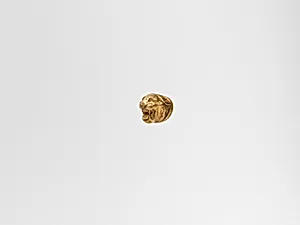
Gold head of a lion
Unknown Artist
ca. 450–400 BCE
Medium
Gold
Dimensions
Diam.: 7/16 in. (1.1 cm)
Classification
Gold and Silver
Culture
Greek, Cypriot
Department
Greek and Roman Art
Museum
Metropolitan Museum of Art, New York, NY
Credit
The Cesnola Collection, Purchased by subscription, 1874–76
Accession Number
74.51.3330
Rights
Public Domain
Tags
Art Historical Context
This exquisite gold head of a lion crafted around 450–400 BCE, a diminutive marvel measuring just 7/16 inch (1.1 cm) in diameter. Forged from pure gold by an unknown Cypriot Greek artisan, it exemplifies the masterful metalworking of the Classical period. Likely part of jewelry, an ornament, or a votive offering, its small scale belies its intricate detailing—the fierce expression, stylized mane, and alert ears capture the lion's majestic power in miniature form. Hailing from ancient Cyprus, a cultural crossroads between Greek mainland influences and Eastern traditions, this piece reflects the island's vibrant Bronze-to-Iron Age artistry. Cypriot goldsmiths were renowned for their technical prowess, often using hammering and repoussé techniques to create lifelike animal motifs. Lions held profound symbolic weight in Greek and Near Eastern iconography, representing strength, royalty, and divine protection—perhaps evoking the Nemean Lion slain by Herakles. Acquired through The Cesnola Collection at The Metropolitan Museum of Art, this artifact sheds light on Cyprus's prosperous city-kingdoms like those excavated by Luigi di Cesnola in the 19th century. It invites us to ponder the hands that shaped it millennia ago, a testament to enduring human creativity.