
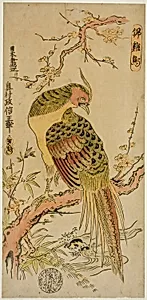
Golden Pheasant (Kinkeicho)
c. 1720/25
Medium
Hand-colored woodblock print; hosoban, urushi-e
Dimensions
32.2 × 15.5 cm (12 1/2 × 6 1/8 in.)
Classification
woodblock print
Department
Arts of Asia
Museum
Art Institute of Chicago
Accession Number
19812
Rights
Public Domain
Art Historical Context
Behold the exquisite *Golden Pheasant (inkeicho)*, a hand-colored woodblock print by the innovative Edo-period artist Okumura Masan, created around 1720–25. Measuring a slender 32.2 × 15.5 cm in the narrow hosoban format, this urushi-e print exemplifies early ukiyo-e mastery from Japan's "floating world" culture, where art celebrated beauty, nature, and fleeting pleasures amid the vibrant urban life of Edo (modern Tokyo). Masanobu, a pioneer of single-sheet prints, elevated the urushi-e technique—using glossy black inks mixed with vegetable glue and meticulously hand-applied colors—to mimic the luster of lacquerware. The golden pheasant, a symbol of splendor and grace in Japanese lore, likely shimmers here with radiant feathers, capturing nature's opulence in intimate scale. Hosoban prints like this were affordable and popular, often adorning homes or serving as actor portraits, bridging elite aesthetics with everyday appreciation. Housed in the Art Institute of Chicago's Arts of Asia collection, this work highlights the dawn of color woodblock printing, predating multicolor techniques like nishiki-e. It invites visitors to marvel at Masanobu's blend of technical brilliance and poetic elegance, a window into 18th-century Japan's artistic flowering.
About the Artist
Okumura Masanobu · 1686–1764
Japanese, 1686–1764