
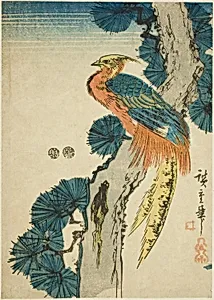
Pheasant and pine tree
c. 1847/52
Medium
Color woodblock print; koban
Dimensions
22 × 15.7 cm (8 5/8 × 6 1/8 in.)
Classification
woodblock print
Department
Arts of Asia
Museum
Art Institute of Chicago
Accession Number
31642
Rights
Public Domain
Art Historical Context
Utagawa Hiroshige's *Pheasant and Pine* (c. 1847/52) is a captivating example of late Edo-period ukiyo, the Japanese art of woodblock prints depicting the "floating world" of everyday beauty. This intimate koban-format print—measuring just 22 × 15.7 cm—showcases a majestic pheasant amid a sturdy pine tree, rendered in vibrant colors through the meticulous woodblock process. Hiroshige, a master of the genre famed for his poetic landscapes like *The Fifty-three Stations of the Tōkaidō*, here turns his eye to nature's elegance, capturing the bird's iridescent feathers and the pine's resilient branches with exquisite detail. The koban size made such prints affordable and portable, popular among merchants and collectors during Japan's vibrant urban culture. Woodblock printing involved carving multiple blocks for each color layer, allowing Hiroshige's delicate gradients and textures to shine—techniques that influenced Western artists like Van Gogh and Whistler. In Japanese tradition, the pine symbolizes longevity and steadfastness, while the pheasant evokes seasonal grace and vitality. This work, housed in the Art Institute of Chicago's Arts of Asia department, invites visitors to savor Hiroshige's harmonious blend of realism and lyricism, a window into 19th-century Japan's reverence for the natural world.
About the Artist
Utagawa Hiroshige · 1826–1869
Utagawa Hiroshige (1797–1858), born Andō Tokutarō, was the last great master of Japanese ukiyo-e woodblock printmaking and one of the most influential landscape artists in history. Born in Edo (modern Tokyo) into a low-ranking samurai family serving as fire wardens, Hiroshige transformed landscape printmaking into a poetic meditation on nature, weather, and everyday life. His revolutionary approac...