
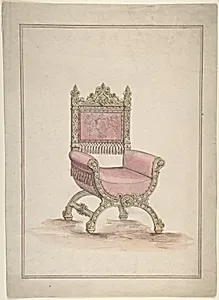
Gothic Style Chair
19th century
Medium
Graphite and watercolor
Dimensions
sheet: 14 3/4 x 10 3/4 in. (37.5 x 27.3 cm)
Classification
Drawings|Ornament & Architecture
Department
Drawings and Prints
Museum
Metropolitan Museum of Art, New York, NY
Credit
The Elisha Whittelsey Collection, The Elisha Whittelsey Fund, 1963
Accession Number
63.616.9
Rights
Public Domain
Tags
Art Historical Context
This delicate 19th-century drawing titled *Gothic Style Chair*, the intricate beauty of Gothic Revival furniture design by an anonymous British artist.ed in graphite and watercolor on a modest sheet measuring 14 3/4 x 10 3/4 inches, it exemplifies the precision of preparatory sketches used by architects and designers of the era. The graphite outlines define the chair's ornate tracery, pointed arches, and crocketed details—hallmarks of medieval Gothic ornament—while soft watercolor washes add depth and a sense of carved wood texture. Created amid Britain's Gothic Revival movement, which flourished in the 19th century as a romantic reclamation of medieval aesthetics, this work reflects a cultural fascination with the past. Architects like A.W.N. Pugin championed Gothic forms in furniture and interiors, blending historicism with Victorian innovation. As part of the Metropolitan Museum of Art's Drawings and Prints department, classified under Ornament & Architecture, it offers insight into how such designs bridged fine art and functional objects, influencing everything from grand country houses to ecclesiastical furnishings. Housed in The Elisha Whittelsey Collection (acquired via The Elisha Whittelsey Fund in 1963), this anonymous gem invites visitors to appreciate the artistry behind everyday elegance, reminding us how 19th-century draftsmen revived Gothic splendor for modern tastes.
About the Artist
Anonymous, British, 19th century · 1800–1900
**Anonymous, British, 19th century** is not the name of a single individual but a standard museum attribution used for works whose creators remain unidentified yet are clearly British and date to the 1800s. Major institutions, including the Metropolitan Museum of Art, employ this designation for hundreds of drawings, prints, designs, and decorative studies that lack signatures or firm documentary ...