
Grandfather Clock
c. 1936
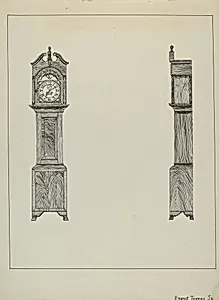
Medium
pen and ink and graphite on paper
Dimensions
overall: 35.8 x 26.3 cm (14 1/8 x 10 3/8 in.) Original IAD Object: 89 1/2"; 18 3/4"wide; 10"deep
Classification
Index of American Design
Department
CG-W
Museum
National Gallery of Art, Washington, D.C.
Credit
Index of American Design
Accession Number
1943.8.4839
Rights
Public Domain
Art Historical Context
**Grandfather Clock** *Ernest A. Towers,., c. 1936* Pen and ink and graphite paper, 35.8 × 26.3 cm (14⅛ × 10⅜ in.) *Index of American Design, National Gallery of Art* meticulous drawing by Ernest A. Towers,., captures the elegant form of a classic grandfather clock, standing an impressive 89½ inches tall, 18¾ inches wide, and 10 inches deep its original form. Created around 1936 using pen and ink with graphite highlights on paper, the work showcases Towers' precise rendering techniques, blending fine lines for intricate details like moldings and clock faces with subtle shading for depth and realism. As part of the National Gallery of Art's collection, it exemplifies the artist's skill in documentation. The artwork hails from the *Index of American Design*, a landmark WPA Federal Art Project from the 1930s that employed artists during the Great Depression to record everyday American objects. This initiative preserved the nation's folk art and craftsmanship heritage through over 18,000 watercolor renderings and drawings, highlighting regional designs like tall case clocks rooted in 18th-century English and colonial traditions. Towers' contribution underscores the cultural value of these functional heirlooms, symbols of timekeeping and family legacy. Today, such pieces educate us on America's design evolution, blending utility with ornamentation. Visitors can appreciate how this Depression-era effort not only supported artists but also fostered national pride in vernacular artistry.
About the Artist
Ernest A. Towers, Jr.
Ernest A. Towers, Jr. was an American artist active during the late 1930s and early 1940s, best known for his meticulous contributions to the Index of American Design, a Federal Art Project under the Works Progress Administration (WPA). This ambitious initiative commissioned artists across the United States to create watercolor renderings of everyday American folk art, crafts, and decorative objec...